A tankless heater warms water only while a tap is open, so it never runs out the way a tank does. That sounds simple, but sizing one is a different job from picking a tank, and it is worth understanding before a plumber arrives.
How tankless sizing works
Tankless units are sized by flow, listed as GPM, at a given temperature rise. The rise is the gap between your incoming water and the temperature you want at the tap. Cold groundwater in northern states needs a larger rise, so the same unit delivers less flow there than it would in a warm climate. A household that runs two showers and a dishwasher together needs more flow than a couple who rarely overlap.
Options to talk through
- Gas condensing units pull more heat from the exhaust and can vent through PVC pipe.
- Non-condensing gas units need stainless venting built for hot exhaust.
- Electric tankless units skip venting but draw heavy current, which can mean a panel upgrade.
- Point-of-use units serve one sink or one bathroom far from the main heater.
What the install involves
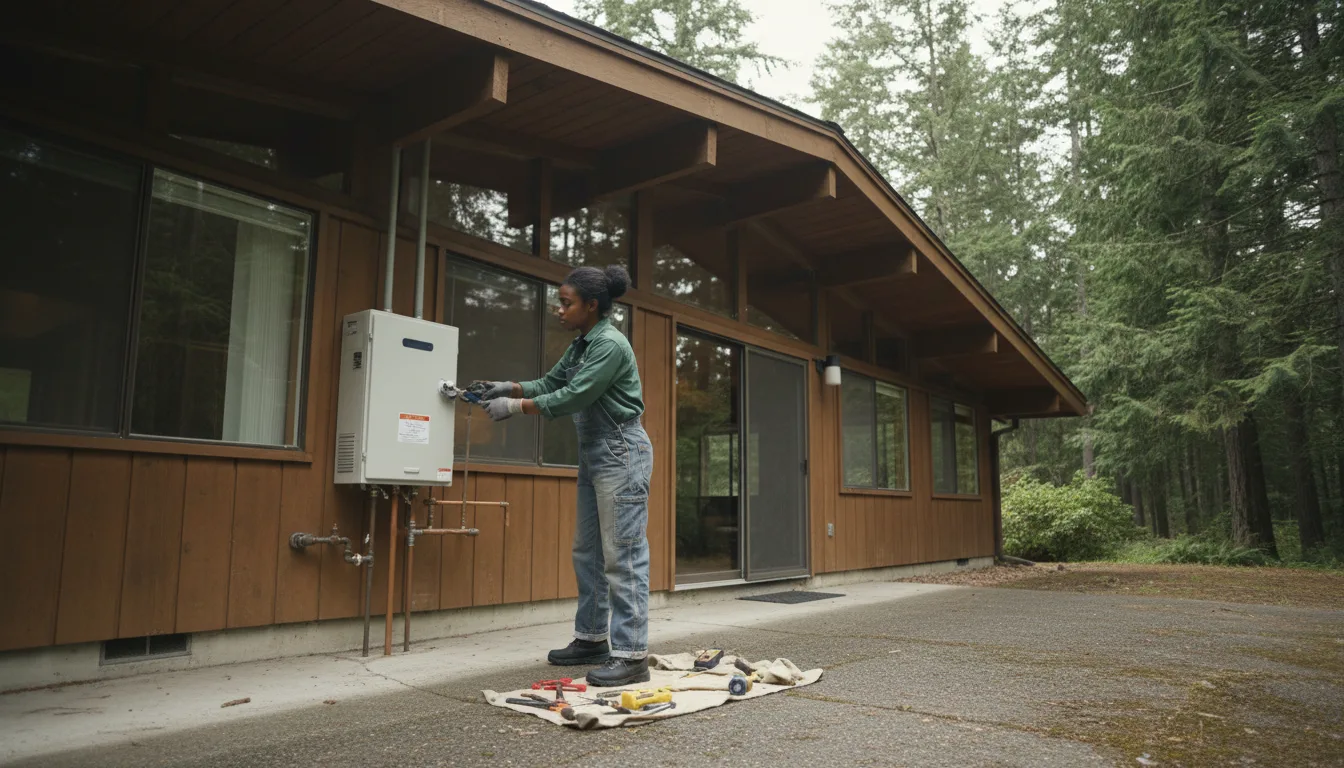
Gas models often need a larger gas line than the old tank used, plus new venting, a condensate drain on condensing units and isolation valves for later descaling. The independent plumber we book in O Fallon, MO checks your gas meter capacity, vent route and electrical supply, then gives you a plan and price before work begins.
Before you call, count your bathrooms and note how often fixtures run at the same time.